
January 2026 by Tamirace Fakhoury
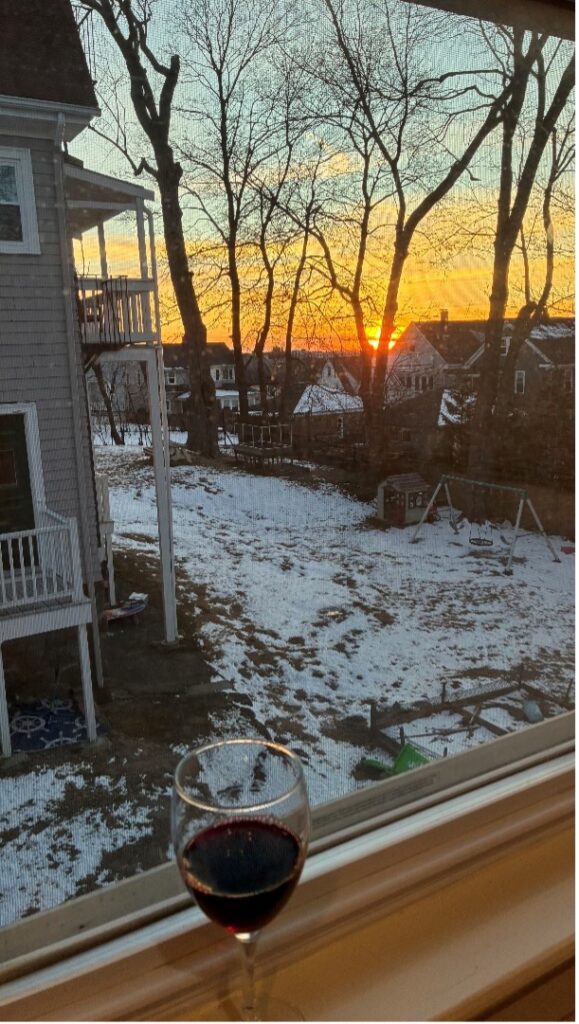
It is Saturday, 4 p.m., roughly eighteen hours before the declared onset of the snowstorm in Massachusetts. Nature is conspicuously calm. I am sipping a glass of wine in my kitchen, looking through the small window at the waning sun. A thin layer of snow remains from the last storm, but it is already melting. The perspective of a big, ravaging snowstorm arriving like a frenzy of frozen rain, falling snow, and violent winds, feels unreal, or at least deferred to a distant future.
As I headed later that evening to the supermarket to fill an empty fridge, I noticed that people were queuing at stores and bakeries. TV news had been urging people to stock up on water, medicine, and non‑perishable food for the coming days. There was also the widespread fear that electricity might shut down and that ice might paralyze the wires to the breaking point.
Amid all this, I was thrown back to the shelter days of Lebanon’s 1975-1990 Civil war. Suddenly, I saw myself in the apartment‑turned‑shelter of my neighbors in Beit Chabab, my native village in Mount Lebanon. It was 1989. I was in secondary school, and that year would mark the last stretch of Lebanon’s battles. This time, Christian political factions were fighting over the consolidation of their power base and their external allegiances in the Lebanese mountains. War became painfully real during those months, and we spent endless days hiding in that apartment, cut off from the world. The intense infighting between the Lebanese Forces and the political faction led at the time by army commander Michel Aoun came to be known as the “War of Elimination” (1989–1990).
I remember, too, the saga of shelter days even before the Christian parties’ infighting. We used to eat the same cheese, stock up on eggs from the village, and fill our sandwiches with thyme and olive oil. I would slip in some jam and Halloumi or Akkawi cheese as well. In short, we ate inexpensive, local, often homemade items. This parallel experience of stuckness (awaiting a massive storm here and awaiting the next round of shelling there) threw me into deep reflection.
In the supermarket, while watching people stock up on food, I could see my mother rushing to the local grocery store to buy lentils, rice, and cheese. I could hear my best friend inviting me to read stories in the shelter as we lit a candle in the dark and silently hoped that our parents would not notice that we were still awake.
Seeing the shelter days of Lebanon’s war through the prism of nostalgia unsettled me. I could not tell whether I would rather be confined because of a looming snowstorm in Massachusetts or because of a war that ate most of my teenage years. This war however also brought my entire neighborhood together in an apartment‑turned‑shelter where we played cards and exchanged confidences. Suddenly, romanticizing the war‑shelter experience felt almost obscene, like a sin or a dark fantasy that I should not give in to. I decided to tune in to the reality of the unfolding storm and await it.
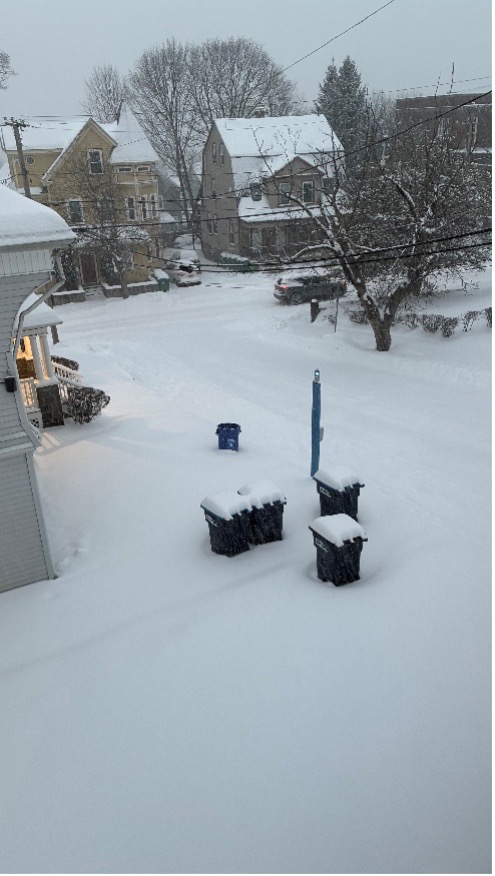
When I woke up the next day, I could not hear a single murmur on the street. The snow had not yet started to fall. Still, it felt as if the entire neighborhood was holding its breath in anticipation of what would soon be ranked as the eighth largest snowstorm to hit Boston and its surroundings since 1978.
Waiting for it felt unreal once again. I started wondering whether it might not happen at all, whether nature might shift gears and chart a different course. I headed to Davis Square in Somerville, hoping that the storm would delay its arrival. In no time, however, more than eighteen inches of snow had covered the streets. I rushed back home.
Nature was as majestic as ever. It invited me to surrender to its white splendor and to feel gratitude for being confined in a spacious townhouse where bomb shelling was not the impending threat.