Sam in Thailand
My project, Patriarchal Confinement, explores how displaced women from Myanmar experience and navigate patriarchal violence across Thailand’s refugee camps, migrant-worker settlements and prisons.
The first round of fieldwork took place in late 2025 and early 2026 across multiple locations in Thailand. Alongside my Research Assistant, Htu Sam (Mahidol University), we interviewed 28 people from 12 organisations supporting displaced women from Myanmar in Thailand. We discussed women’s lives before leaving Myanmar, their journeys to Thailand, and what happened after arriving.
Patriarchal violence followed women across these spaces, confining their lives. Silence and endurance became means of survival. Two examples brought this into particularly sharp focus. In migrant workers’ settlements, women would not even “scream or call for assistance when they [were] being beaten by their intimate partners,” and in refugee camps, women remained “silent” about rape until “the physical harms caused required medical treatment.” Speaking out often carried costs women could not afford (e.g., loss of housing, employment, legal status and deportation). Participants also imagined a life beyond:
“In my perfect world, no one has to worry about gender-based violence. Women can go to the market, and they can live freely mentally, spiritually, just be themselves. Women don’t have to learn to be quiet. I want to see a world where women don’t have to migrate because of men’s violence. Maybe there would be no borders at all, and no term ‘migrant women’, just people, and land, and freedom of movement.”
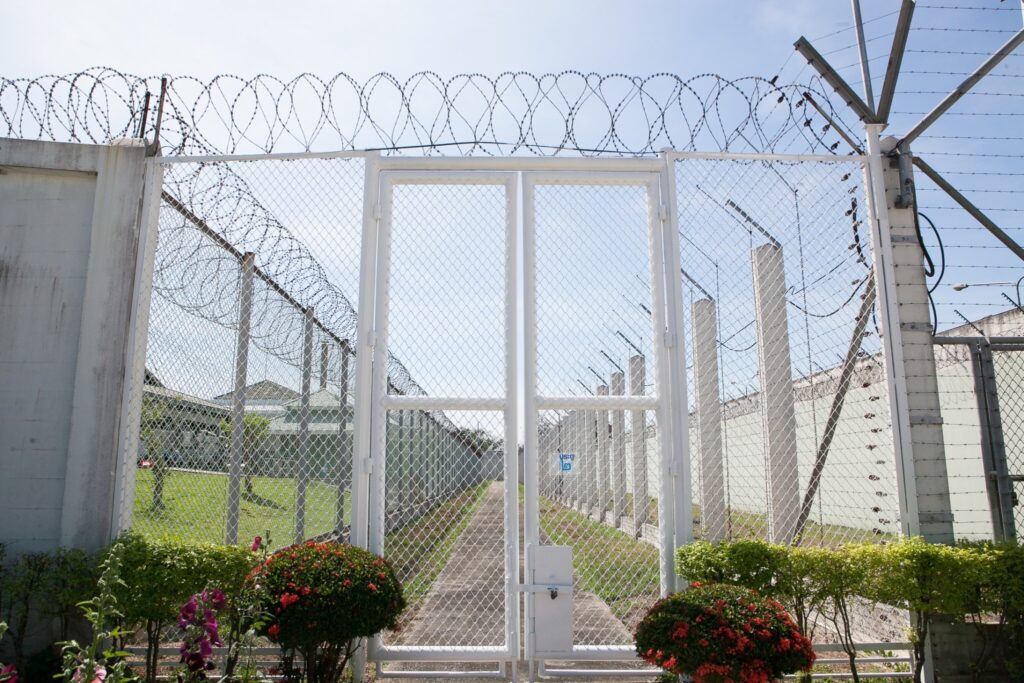
In July and August 2026, I returned to Thailand, this time to interview 19 women from Myanmar who were in prison. Htu Sam and I spoke with them about life before and after their arrival in Thailand, pathways into prison, experiences of imprisonment, and hopes for the future. They described the particular pains of imprisonment while Myanmar was in the midst of civil war: cut off from the outside world, deeply worried about their families, and fearful of what would happen upon their release and deportation.
Two women, in particular, gave striking expression to what CONFINED is about. When we asked one woman what she hoped for in the future, she said there was “no hope” because she had “never been free.” Her words captured, with extraordinary clarity, the stuckness that defined her life. Another woman showed how patriarchal violence can make prison feel like freedom. After years of intimate partner abuse, she said that entering prison felt as though the “chains around [her] wrists and ankles had disappeared”, and that this made her “smile” for the first time in a long time.